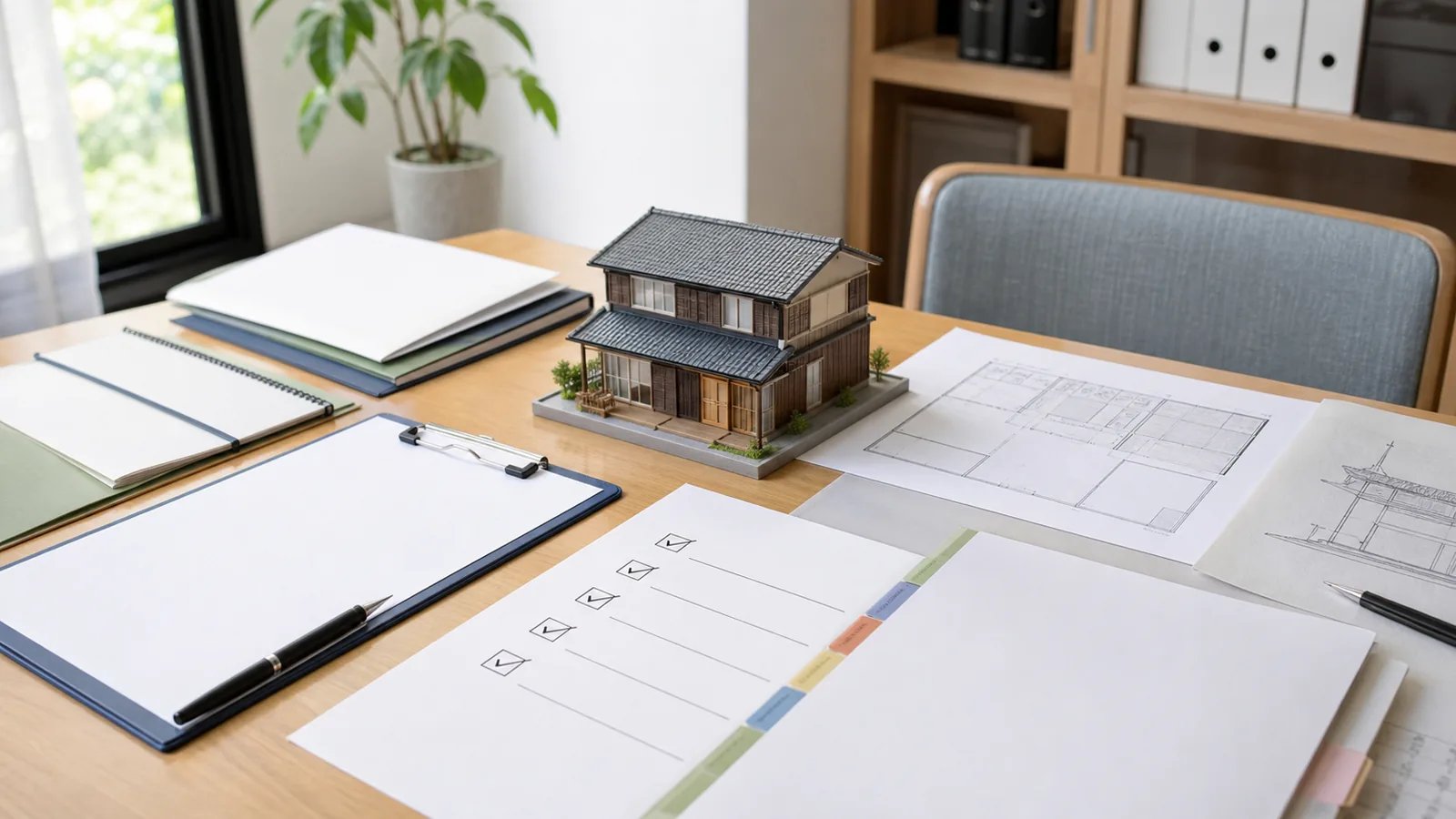
Akiya renovation subsidies in Japan are not one nationwide grant for anyone who buys a vacant home. Most buyer-facing programs are run by prefectures or municipalities, with their own property, residency, contractor, timing, and budget rules. Find the program on an official site, secure written approval before the prohibited commitment point, and never make the purchase depend on an unapproved subsidy.
This guide shows how to discover and screen assistance without confusing a national policy program, tax measure, or local grant. For the underlying project budget, use our scope-first akiya renovation cost guide.
First identify the type of support
“Subsidy” is often used loosely. Separate the following:
| Support type | Typical administrator | Key question |
|---|---|---|
| Akiya purchase or renovation grant | Municipality/prefecture | Does this buyer, property and work qualify? |
| Seismic diagnosis or retrofit aid | Municipality/prefecture | Is the building age/type and approved method eligible? |
| Energy-efficiency program | National/local | Is the product, contractor and application route eligible? |
| Cultural-property repair support | Cultural authority/local government | Is the building designated/registered and is approval required? |
| Tax relief | National/local tax authority | Is this a deduction or reduction rather than cash funding? |
| Policy or model-project funding | National ministry | Is the applicant an organization/project rather than a homebuyer? |
MLIT's vacant-house model program, for example, funds selected organizations and initiatives under defined themes. It should not be advertised as a standing rebate for every purchaser. The MLIT program guidance identifies eligible project actors and activities, while its program Q&A explains that awards may be less than requested and that acquisition costs are not eligible under that program.
Where to find current programs
1. The property's municipality
Search the official municipal site for:
空き家 改修 補助金— vacant-home renovation subsidy空き家バンク 補助金— akiya-bank subsidy移住 住宅 改修— relocation housing renovation耐震 診断 改修 補助— seismic diagnosis/retrofit support浄化槽 補助— septic-system support省エネ リフォーム 補助— energy renovation assistance
Search the municipality where the property physically sits, not the location of your agent or current residence. Then open the current fiscal-year page, program guidelines, application forms, and governing rules.
Do this separately for every candidate market. Someone comparing Sapporo homes for sale with property in Karuizawa cannot carry a subsidy assumption from one municipality to the other; the responsible authority, fiscal budget, eligible work, and continued-use conditions may all differ.
2. Prefectural and national search tools
Energy support is a separate layer. Japan's Ministry of the Environment operates a housing decarbonization support search that groups municipal, prefectural, and national programs by location. The site explicitly tells users to confirm details on the relevant authority's page and warns that closed programs can still appear.
MLIT also publishes information on tax measures for qualifying residential reform. A tax measure has different eligibility, evidence, timing, and cash-flow effects from an upfront grant; obtain tax advice before counting it.
3. The local akiya-bank office
Some grants are tied directly to the municipality's akiya bank. Ask whether:
- the property must be registered before sale;
- the buyer must register as an akiya-bank user;
- the contract must use a designated intermediary;
- the applicant must relocate from outside the municipality;
- the home must become the applicant's principal residence;
- business, rental, or second-home use is excluded.
Our akiya bank Japan English guide explains how to find the official local contact and verify the listing.
Run a five-part eligibility screen
Do not stop at the headline amount. Test five dimensions against the official documents.
Applicant
Check nationality or residence-status language, current address, prior residence, age or household conditions, local-tax arrears, related-party restrictions, and whether owners, tenants, landlords, or businesses can apply. If the program requires relocation or resident registration, ask how and when that is evidenced.
Property
Confirm location, akiya-bank status, vacancy definition, building type, age, lawful status, ownership, and whether the applicant must have completed registration. A grant for an owner registering a rental property is not the same as a grant for an incoming buyer.
Work
Match every proposed line item to eligible-work definitions. Purchase price, furniture, appliances, landscaping, DIY labor, design, demolition, tax, and work outside the main house may be treated differently. Ask whether seismic, asbestos, energy, accessibility, or heritage requirements affect the design.
Contractor
Many local programs require a contractor with an office in the municipality or prefecture. Confirm the exact definition and whether subcontracting affects eligibility. Do not select a builder on an informal assurance that they are “local enough.”
Timing and continued use
Map application, approval, contract, start, payment, completion, inspection, reimbursement, move-in, and reporting dates. Continued residence, rental registration, or ownership obligations may last years and can create repayment risk if plans change.
The most dangerous timing trap
Many subsidy programs prohibit signing a construction contract or starting work before the grant decision. Some impose an even earlier cutoff. Always ask the authority to identify in writing the first action that would make the project ineligible.
MLIT's model-program Q&A, while not a general homeowner grant, illustrates the principle: work begun before the specified selection point is not eligible. Local programs set their own point. Never generalize one program's sequence to another.
Use this approval gate:
- Obtain the current official guidelines and forms.
- Ask the program office to confirm the applicant, property, work and contractor route.
- Complete inspection and preliminary design without crossing the prohibited commitment point.
- Submit required estimates, registry documents, tax certificates, plans and consent.
- Receive the formal decision notice.
- Reconfirm that contract and start are now permitted.
- Preserve invoices, photographs, change approvals and payment evidence.
- Submit completion documents and pass any inspection.
What real local variation looks like
Current municipal pages show why a single nationwide answer is unsafe.
Hida City's FY2026 vacant rental-housing renovation program included conditions involving continued rental registration and contracting with a city-based business; the official Hida City page also states that the year's applications had closed. That is a live example of budget/timing risk.
Nikko City publishes a dedicated akiya-bank renovation subsidy procedure, including completion, amount-finalization, and claim steps. Its existence does not mean a buyer elsewhere receives the same terms.
Taketa City's akiya renovation grant rules connect the work to settlement and same-fiscal-year completion. Again, use it to understand the questions to ask, not as a promise about another municipality.
Prepare a grant-ready evidence file
Maintain a folder containing:
- program page PDF or dated copy;
- current guidelines and application form;
- written correspondence with the authority;
- buyer identity and residence evidence;
- tax-clearance documents where required;
- registry records and seller/owner consent;
- akiya-bank listing and user-registration evidence;
- inspection report, drawings, specifications and photographs;
- itemized estimates from eligible contractors;
- formal grant decision and approved scope;
- contracts, invoices, bank-payment proof and change approvals;
- before/during/after photographs;
- completion inspection and reimbursement documents;
- calendar of continuing obligations.
Translate for your understanding, but submit the version and format the authority requires. If a professional acts for you, define who is responsible for each deadline.
Combine programs carefully
Two programs may fund different work, prohibit double funding of the same cost, or calculate eligible expense after other aid. Ask every administrator:
- Can this program be combined with the named second program?
- Which invoice lines belong to each?
- In what order are awards deducted?
- Does tax relief use cost net of subsidies?
- What happens if one award changes?
Get the answer in writing before allocating the same invoice to two applications.
A subsidy-safe decision rule
Use three budget cases:
| Case | Treatment |
|---|---|
| Base | No unapproved assistance |
| Approved | Only amounts stated in formal decisions |
| Downside | Delay, reduced eligible cost, or repayment trigger |
Proceed only if the base case is financeable or the grant approval is an explicit condition satisfied before an irreversible commitment. Grants can improve a good project; they should not make an uninspected building affordable by assumption.
Sources
- MLIT — Vacant-house model program guidance
- MLIT — Vacant-house model program Q&A
- Ministry of the Environment — Housing decarbonization support search
- MLIT — Tax measures for qualifying home renovation
- Hida City — FY2026 vacant rental-housing renovation subsidy
- Nikko City — Akiya-bank renovation subsidy
- Taketa City — Akiya renovation subsidy rules
Important note
This article is general information, not legal, tax, grant, architectural, or financial advice. Programs, budgets, eligibility, deadlines, and combination rules change. Use the current official documents and obtain written confirmation from every administering authority before signing, starting work, or relying on assistance.