— Hey guys, quick plug before we start:
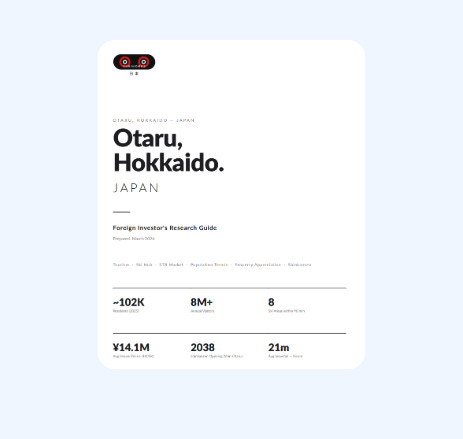
_First, something serious: OurOtaru Investment Guide. We spent half a year on it, it’s packed with data and everything you need if you’re considering buying in Otaru. _
Second, something silly:The YukiHomes Beanie. If you want to look as dumb as me, hit the preorder link, shipping Summer 2026, only making 50 because we are not sure how many people actually want them, so they will be limited. —
We’ve spent a lot of time in ski towns, touring mountains, touring homes, shoveling excessive amounts of snow, and debating whether the next Niseko is hiding somewhere in Central Hokkaido. All of that still stands. But spring is here, summer is coming, and typhoon season is right behind it. Which got me thinking: I haven’t written nearly enough about surf towns in Japan.
Do they offer the same returns as ski towns? The same potential? The same international demand? I’m going to answer all of that, pick a house, find some comps, and let the numbers speak.
The town we’re looking at today is Miyazaki.
Where Is Miyazaki And What Makes It Different?
Miyazaki sits on the southeastern coast of Kyushu, Japan’s southernmost main island, facing the Pacific Ocean. It’s warm and subtropical, a coastline lined with palm trees, black sand beaches, and point breaks that draw surfers from across Japan and increasingly from abroad.
What makes Miyazaki unusual in the context of Japanese real estate is its population story. Almost every city and rural town in Japan has been declining for the better part of three decades. Miyazaki is an exception. The city’s population peaked around 2020 at approximately 401,000 people , making it one of the rare urban centers in regional Japan that was still growing into the pandemic era.
The reasons are layered. Miyazaki city has been systematically attracting IT and technology companies since the early 2010s, positioning itself as a lifestyle alternative to the pressures of Tokyo and Osaka. The city offered lower costs, a warmer climate, outdoor access, and genuine quality of life. When remote work policies expanded rapidly in 2020, that value proposition resonated, people with location flexibility started choosing Miyazaki. The city absorbed migration from surrounding rural areas of Miyazaki Prefecture, which were hollowing out fast, and it picked up some urban refugees from larger metros as well.
That said, the tailwinds are now working against it. Since 2020, Miyazaki has been declining, slowly, at around 0.23% annually, but steadily. And when you look further out, Japan’s national population is projected to fall roughly 24% by 2050, with regional cities outside of Tokyo and Osaka facing steeper declines than the national average. Miyazaki Prefecture as a whole is expected to lose a substantial share of its population by mid-century.
What does this mean for your investment? It means you should not underwrite this house expecting Niseko-style appreciation. This is not that play. Even in the heart of Miyazaki City, the strongest market in the prefecture, where prices have risen roughly 30–45% over the past five years, the outlook is still modest, with most projections pointing toward slow, inflation-level growth at best. Unlike ski towns that are getting discovered by international capital, Hakuba, Myoko, and what I think is coming for Otaru, Miyazaki is unlikely to see dramatic price appreciation driven by foreign demand for a lifestyle asset. Your house will likely hold value or modestly appreciate over the long run with a real chance it depreciates. The return here is mostly income-driven, and that’s fine, as long as the numbers work.
A Quick Comparison: What Are Homes Actually Selling For?
To understand how Miyazaki stacks up as an acquisition play versus the ski towns we’ve looked at, here’s a rough home price comparison based on current market data:
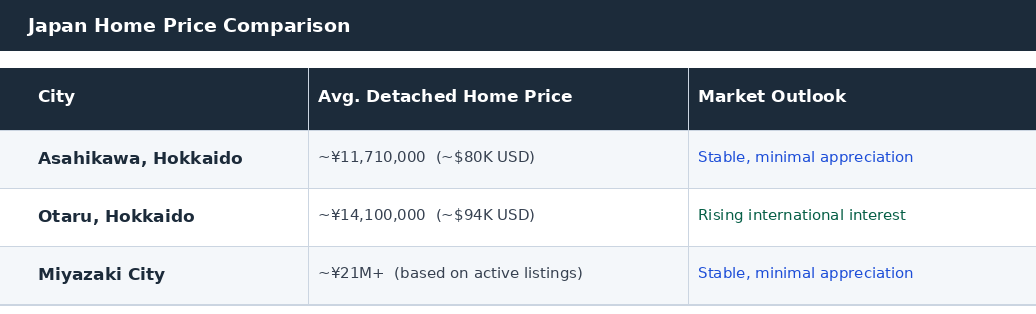
Miyazaki comes in higher than either Hokkaido city, largely because of its warmer climate, coastal access, and the relative scarcity of larger modern homes in desirable beachside neighborhoods. You’re paying a premium for the lifestyle location.
Tourism Demand: How Does Miyazaki Stack Up?
This is where the comparison gets interesting. Asahikawa Airport serves upwards of five million visitors annually , and the city benefits from a dense cluster of ski resorts, a famous zoo (Asahiyama), and a well-established domestic tourism circuit. It’s deeply embedded in Japanese travel culture.
Miyazaki is less trafficked in raw numbers, but it’s on a meaningful upward trajectory. Kyushu as a region saw a 37% increase in international visitors in 2024 , pushing past pre-pandemic levels for the first time. Miyazaki specifically has been gaining international visibility, cruise calls to Miyazaki ports are increasing year over year, and the prefecture’s surf culture, food scene, and outdoor offerings are attracting a younger, more adventurous traveler profile.
The honest take: Miyazaki doesn’t draw the same volume as Asahikawa yet, but it has a more diverse seasonal demand curve, surf and beach in summer, milder winter travel, and a growing international presence. That matters for a rental property.
The Short-Term Rental Market
Here’s what the data shows for 3–4 bedroom homes on Airbnb in Miyazaki City :
33 active listings in this category
44% average annual occupancy
33,000 yen average nightly rate
~5,000,000 yen average annual revenue
July is the peak month at 62% occupancy; February comes in second at 58%
That February number deserves attention. February in Miyazaki isn’t ski season, it’s mild, relatively dry Pacific coast winter, and people come for the warmth, the coast, and the food. This is not a single-season market.
For context, Asahikawa has 88 listings in the same category to Miyazaki’s 33. You have a much thinner supply of quality inventory here. That’s an opportunity, if you build a great product, you’re not swimming in competition.
The weakness in the Miyazaki data is the upper end. July at 62% is solid, but the spring and fall shoulder seasons are soft. A well-optimized listing with strong photography and a signature amenity can pull those periods up meaningfully.
Two Real Comps in Aoshima
The neighborhood we’re focused on is Aoshima , a small beachside enclave on the southern edge of Miyazaki City, known for its offshore island shrine, black sand surf breaks, and a growing concentration of well-designed short-term rentals.
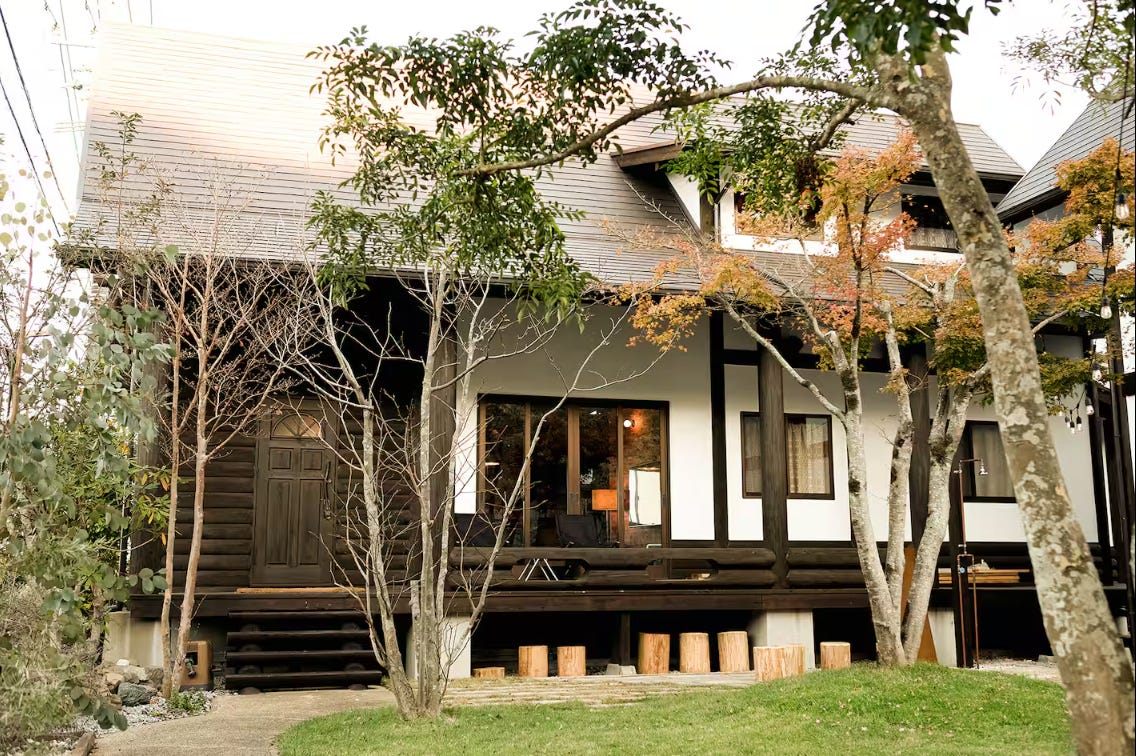
Comp #1 — The Market Leader
This is what a maximally optimized Airbnb looks like in Miyazaki. Well-photographed, clean, open design, quality furniture, nothing cluttered. It’s built around exactly what guests are looking for.
76% occupancy
37,600 yen per night
~10,000,000 yen in annual revenue
This is a top-performer and a genuine outlier. Hitting these numbers requires everything to be dialed in — location, design, photography, listing management, and pricing strategy.
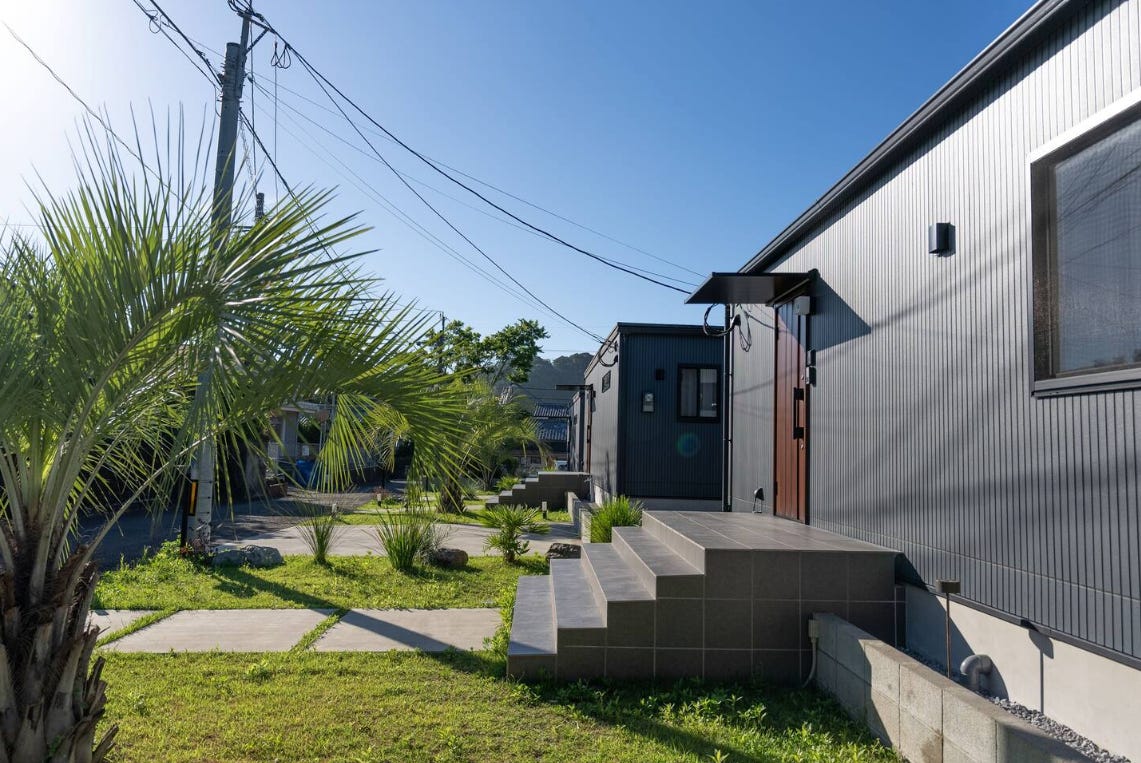
Comp #2 — The Cautionary Tale
This listing has a sauna, which is a legitimate differentiator in this market. But everything else was done with minimal effort and low-quality materials. Nothing on the walls, furniture that looks like it was assembled in 20 minutes, no design cohesion.
32% occupancy
63,000 yen per night
~7,000,000 yen in annual revenue
High nightly rate, low occupancy. The owner went for the “less wear and tear” model but is leaving a lot of money on the table. What’s interesting here is that even an underperforming listing with a sauna is pulling ¥7M. The sauna is doing real work.
The takeaway: The Miyazaki market has a wide gap between top performers and everyone else. The listings that treat this as a real hospitality product are winning. The ones built with minimum effort are fighting for scraps. There is clear upside for anyone willing to do it right.
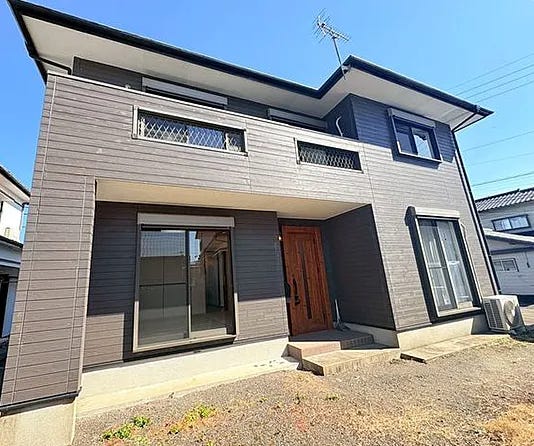
The Property: Breaking It Down
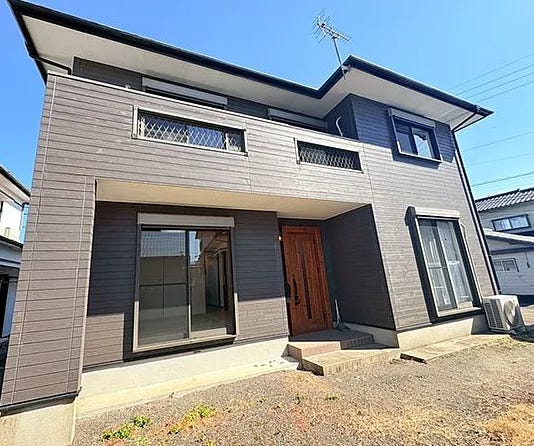
Listing: Aoshima, Miyazaki City Price: 21,800,000 yen (~136,663 USD) Size: 127 square meters (1,367 sq ft) Layout: 4LDK Year Built: Newer construction
The bones here are genuinely good. This is a newer home, which means you’re getting solid insulation, air conditioning in every room, and modern fixtures without the structural unknowns that come with a 1980s rebuild in Hokkaido. There’s a balcony, and it’s a 10-minute walk to the train station with direct access into downtown Miyazaki.
It’s not architecturally striking. It’s a functional modern Japanese house. In a market with only 33 listings in this category, you don’t need to be the most beautiful property, you need to be the most thoughtfully presented one. Smart furniture selection, good photography, a curated listing, and one signature amenity goes a long way when the competition bar is this low.
Renovation Budget
This one is lean. No structural work needed, no aging pipes or rotting floors. The spend here is strategic, not corrective.
ItemEstimated Cost (Yen)Costco barrel sauna (outdoor)¥1,000,000Furniture & interior design¥1,500,000Total Renovation Estimate¥2,500,000
Total Acquisition + Setup Cost: ¥24,300,000 (~152,000 USD)
The Financial Case
Using the Miyazaki market average as our conservative baseline:
Annual Revenue: ¥5,000,000
Expense Annual Cost (Yen)
Property management (25%) ¥1,250,000
Utilities (electricity, water, gas, WiFi) ¥420,000
Taxes + homeowners insurance ¥330,000
Miscellaneous buffer (10%) ¥500,000
Total Expenses¥2,500,000
A note on utilities: Miyazaki’s subtropical climate means summer air conditioning runs hard. With ACs in every room and peak season occupancy in July, electricity costs will spike in the warmest months. The ¥420,000 annual estimate (~¥35,000/month during peak, lower off-season) accounts for this. It’s meaningfully higher than what you’d budget for a Hokkaido property in winter, where heating costs are offset by fewer AC-heavy months.
Net Annual Profit: ¥2,500,000 (~15,673 USD)
Return on Investment: ~10.3% annually
How Does This Compare to Asahikawa?
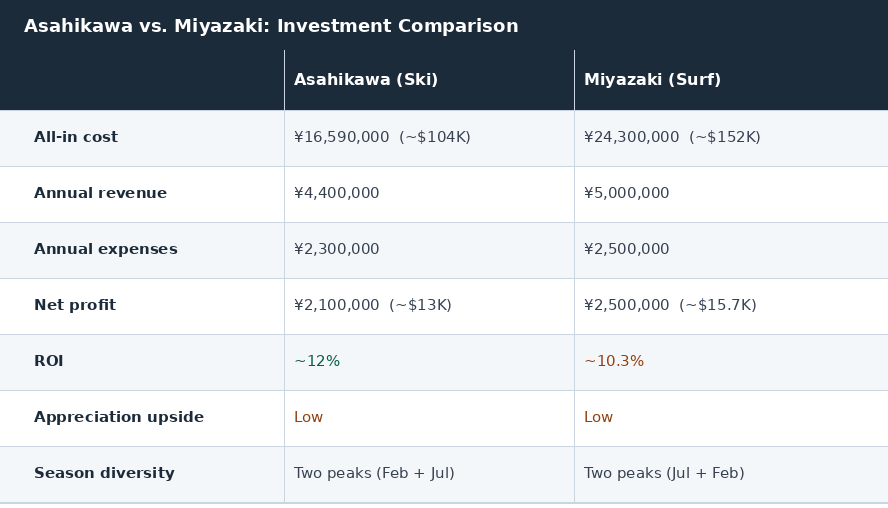
Asahikawa wins on ROI percentage because the acquisition cost is significantly lower. Miyazaki wins on absolute dollar profit and offers a warmer-climate lifestyle asset if that matters to your personal use case.
If I had to make a bet which market would appreciation over the next 25 years. My gut say’s I’d Choose Asahikawa.
The Bottom Line
Miyazaki won’t be the next Niseko. It’s not going to double in value over a decade on the back of international investor demand. If price appreciation is what you’re optimizing for, this is not your market.
But if you’re looking for a double-digit income-producing property in an underserved short-term rental market, with a genuinely beautiful coastal location, a year-round demand curve, and enough room to outcompete weak inventory, Miyazaki is a serious contender.
Let’s face Japan is not a world class surf destination so its unlikely it’ll become the next Bali.
But for ~$152,000 USD all-in, a well-executed listing here generates a realistic 10%+ cash return in a market where the competition is largely asleep. And you get a beachfront base on the best surf coast in Japan.
Sometimes that’s the whole story.
All figures are estimates based on available AirDNA market data and publicly listed properties. Currency conversions based on approximate exchange rates at time of writing. Always conduct independent due diligence before any real estate investment.
Browse opportunities yourself: Check out current listings at Nipponhomes.com
Book Consultation | Subscribe to our newsletter
We’ve been building out a solid list of travel + ski partnerships lately.
If you’re gearing up for a trip and need things like luggage, Goggles, insurance and much much more there are some really good deals below.
We’re always looking to partner with great travel + ski brands.
If you’d like to be featured on our perks page, reach out at:Grant@yukihomes.com
This content is for informational and educational purposes only and reflects my personal opinions and experience. I am not a licensed financial advisor, tax advisor, or attorney. Readers should conduct their own due diligence and consult qualified professionals before making any investment decisions.
Subscribe