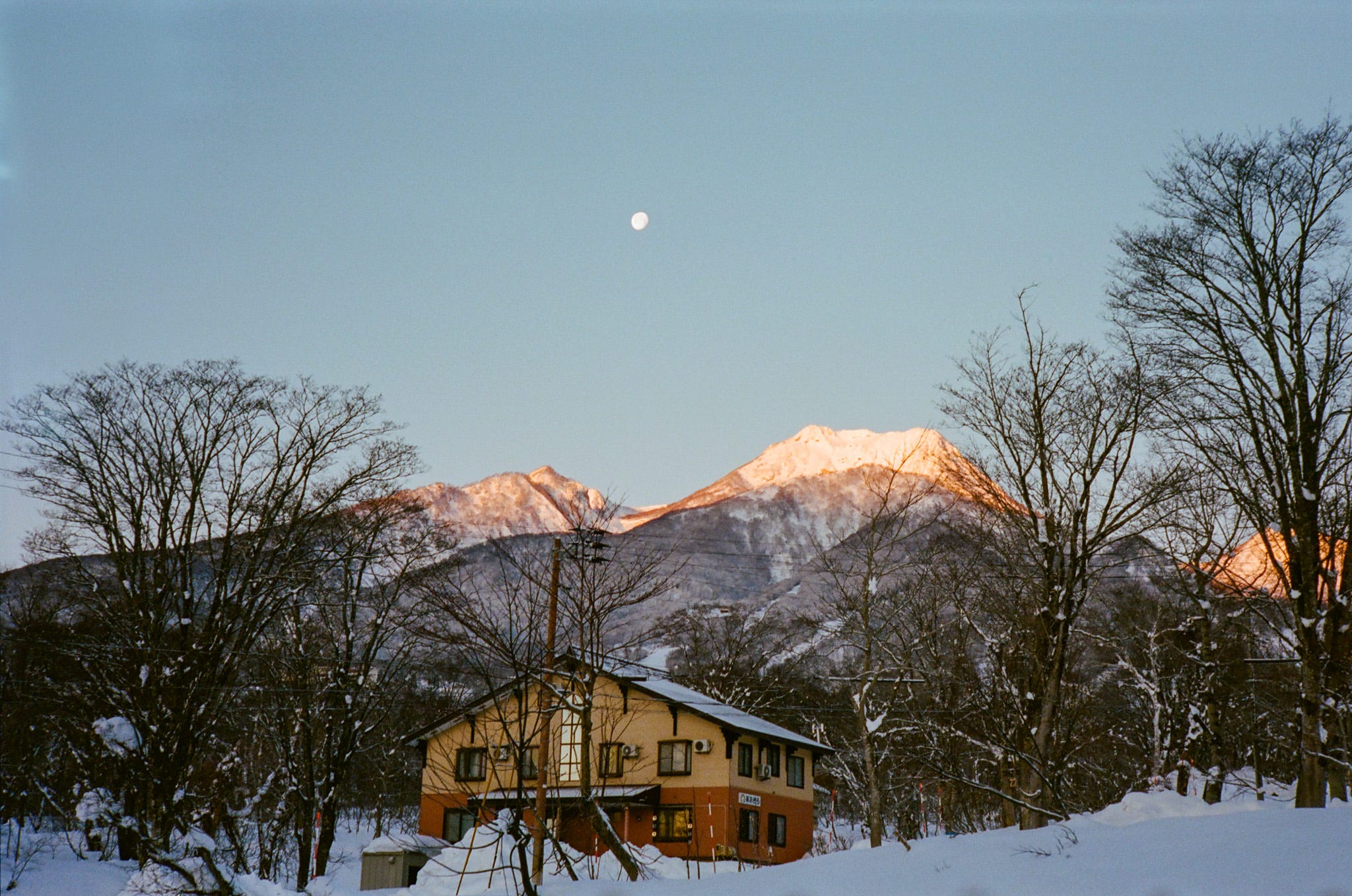
Towns across Japan are reacting in very different ways to the sudden influx of foreigners, whether they’re tourists, second-home buyers, permanent residents, or people looking to operate vacation rentals.
Outside Tokyo, Kyoto, Fukuoka, and Osaka, there are now smaller towns dealing with what some people might call a “foreigner problem.” Relative to the size of these communities, the amount of foreign attention can feel massive.
But some people (like me) might call it a foreigner solution.
A dying town gets a massive shock to the economy. Money starts pouring in. Old homes are renovated. New businesses open. Jobs are created.
That comes with its own set of challenges, but I think those are much better problems to have than the bleak, ghost-town future facing MOST of rural Japan.
Most of these demand shocks are happening in ski towns.
The reason is pretty simple:
Real estate close to ski resorts is inherently limited. Japan is world-class. Housing is cheap.
Put those three things together, and people from around the world are naturally going to want a piece of Japanese land in a mountain town.
Two of these towns are Myoko and Iiyama.
They’re in separate prefectures, Myoko in Niigata and Iiyama in Nagano, but they’re incredibly close. Depending on exactly where you’re driving, Iiyama Station and the main Myoko resort villages are roughly 30 to 45 minutes apart.
Madarao Mountain Resort actually crosses the prefectural border, with parts of the ski area sitting in both Iiyama and Myoko.
Both areas are densely packed with ski resorts. Both receive massive snowfall, some of the most in the country. Both offer access to some of Japan’s steepest on piste terrain.
They’re also both incredibly beautiful.
Mt. Myoko is stunning, but it’s hard to beat Iiyama’s sprawling rice paddies, historic homes and temples, with massive snow capped mountains towering behind them in every direction.
Yet these two towns seem to be responding to the “foreigner solution” in almost completely opposite ways.
Myoko is welcoming foreign investment. Flat out.
The biggest example is Singapore-based Patience Capital Group. They’ve outlined a total spending of around ¥210 billion, roughly $1.4 billion USD, with hotels, residences, commercial areas and worker housing planned over roughly a decade.
The scale of the announced investment is enormous.
On the individual-home level, our experience has been similar.
Homes are openly marketed and sold to foreign buyers.
The Akiya bank is one of the most permissive we have dealt with and we’ve also seen a few homes sell above asking price.
That is not something you traditionally see very often in rural Japanese real estate.
Iiyama has been almost the complete opposite.
We have clients who have been looking for a house there for eight months and still cannot get one.
There are two major issues.
The first is the type of housing stock.
Myoko has a long history as a resort destination. There are ryokans, pensions, lodges and bessō vacation-home developments.
Iiyama is different.
It’s a historic agricultural mountain town filled with rice paddies, working farms, temples and traditional homes. Many houses come with registered farmland attached.
Farmland essentially cannot be purchased by foreigners who do not have plans to move to Japan. They need approval from the local agricultural committee, must efficiently cultivate the land, must regularly participate in the necessary farming work.
Our friend Gabe, who works with the Iiyama tourism bureau, believes there may be additional pathways in certain cases. I don’t want to speak for him, though. When he has a concrete answer about whether and how an overseas buyer could legally acquire and maintain farmland without immediately relocating to Japan, I’ll share it.
In our experience searching in Iiyama, something like 70% of the houses we come across have some form of farmland attached.
For now, the farmland issue removes a huge percentage of Iiyama’s available housing from consideration.
Then there’s the other 30%.
I’m skeptical that every seller wants to sell to foreigners.
We had a client tour a house and make an offer. After the foreign buyer became serious. The “mayors friend” made an offer and of course it was accepted.
I’m not one to immediately jump to conspiratorial conclusions. But when these situations happen repeatedly, it becomes difficult not to wonder whether foreign buyers are being quietly boxed out.
Even Gabe, who works locally and has made a multiyear commitment to remain in Iiyama has had trouble getting a house…
The hotel controversy is another example of the town’s cautious approach to development.
A hotel had been planned directly across from Iiyama’s Shinkansen station. The city originally contemplated providing as much as ¥500 million in subsidies.
After taking office, current mayor Kishio Ezawa said in 2023 that the subsidies could not be executed.
The city and developer later reached a mediated compromise that reduced the subsidy and changed the building design, but the city council rejected that agreement.
The developer then withdrew from mediation and pursued legal action against the city.
I’ve heard rumors that the investment eventually shifted toward Myoko
When you drive around Iiyama, not every field is productive. There are fallow fields, abandoned homes and buildings slowly deteriorating under some of the heaviest snowfall in Japan.
So my question for the people who believe they are preserving something by keeping Iiyama gatekept is this:
Are fallow fields and crumbling homes preserving a culture?
Or would allowing foreign people to come in, learn these crafts, maintain the land and participate in the community be a better form of preservation, especially when younger Japanese citizens do not want to take over the work?
There’s a local restaurant serving 100% buckwheat soba that is worried its buckwheat producer will die without anyone taking over the farm and continuing to grow this prized crop.
To me, that doesn’t sound like preservation.
It sounds like death.
There is obviously a right and a wrong way to welcome outsiders. Foreign buyers shouldn’t arrive, ignore local customs, leave properties unmaintained or convert every available home into a vacation rental.
But preservation cannot just mean freezing a place in time while the population disappears and the buildings collapse.
Real preservation requires people.
I’m not sure the way Myoko is handling this will automatically produce the perfect outcome either.
There is plenty of criticism over what happened in Niseko: rising land prices, businesses increasingly designed for wealthy tourists, housing problems for local workers and parts of the community feeling disconnected from the people who actually live there.
You hear people in Myoko say all the time that they are taking steps to prevent Myoko from becoming another Niseko.
But once the train leaves the station, it can be very hard to stop it.
I read this substack recently about Lisbon:
15 years ago Lisbon was begging for investment, renovation, revitalization and it got exactly that. There public policy was a massive success.
Now locals are priced out and justifiably angry.
But in my opinion, the alternative was worse.
You’re never going to make everyone happy.
When a place is dying, people beg for investment, tourism and revitalization (Not so much Iiyama). When the investment finally comes and the town becomes desirable, people complain that prices are rising and the place is changing.
Both concerns can be legitimate.
Luckily, Japan is not Lisbon. It’s one of the few major economies that doesn’t use the same backward, hyper-local Euclidean zoning common across the West, where wealthy residents can use neighborhood politics to squash new development and constrain housing supply.
Japan is one of the few countries that can handle these housing shocks and build to meet demand.
Niseko has proved that.
It’s not perfect by any means, but they’ve been able to build far more housing, hotels and condos than you’d see in a comparable North American ski town.
Japan’s zoning structure, tax system and generally more pro-growth attitude make it much easier for towns to respond and adapt when demand increases.
I would much rather see more of what’s happening in Myoko than what’s happening in Iiyama.
Myoko is at least attempting to attract capital, create employment, improve aging infrastructure and give younger people a reason to move there.
If you want dive deeper into Myoko’s real estate market. Download ourInvestment Guide. Everything we know about Myoko in one place... land price trends, which areas are actually appreciating, STR occupancy. $39.99
Iiyama may instead be dying a slow death.
That isn’t just rhetoric. Iiyama itself has cited a population projection showing the city falling to around 10,400 residents by 2050, a 46.8% decline from 2020, if current trends continue.
There is, however, a potentially important turning point coming.
Iiyama’s mayoral election is scheduled for October 25, 2026. Former deputy mayor Tomohiro Niinomi has announced his candidacy and is explicitly campaigning on revitalizing the area around Iiyama Station, including attracting hotel and commercial development to create jobs and increase activity.
That’s a good sign.
Because Iiyama doesn’t have to become Niseko.
It doesn’t even have to become Myoko.
But it does have to decide whether preservation means carefully managing change or simply refusing change until there is almost nothing left to preserve.
Ready to buy a house?: Book a call here
Browse opportunities yourself: Check out current listings at Nipponhomes.com
We’re always looking to partner with great travel + ski brands.
If you’d like to be featured on our perks page or partner with us, reach out here:
This content is for informational and educational purposes only and reflects my personal opinions and experience. I am not a licensed financial advisor, tax advisor, or attorney. Readers should conduct their own due diligence and consult qualified professionals before making any investment decisions.